

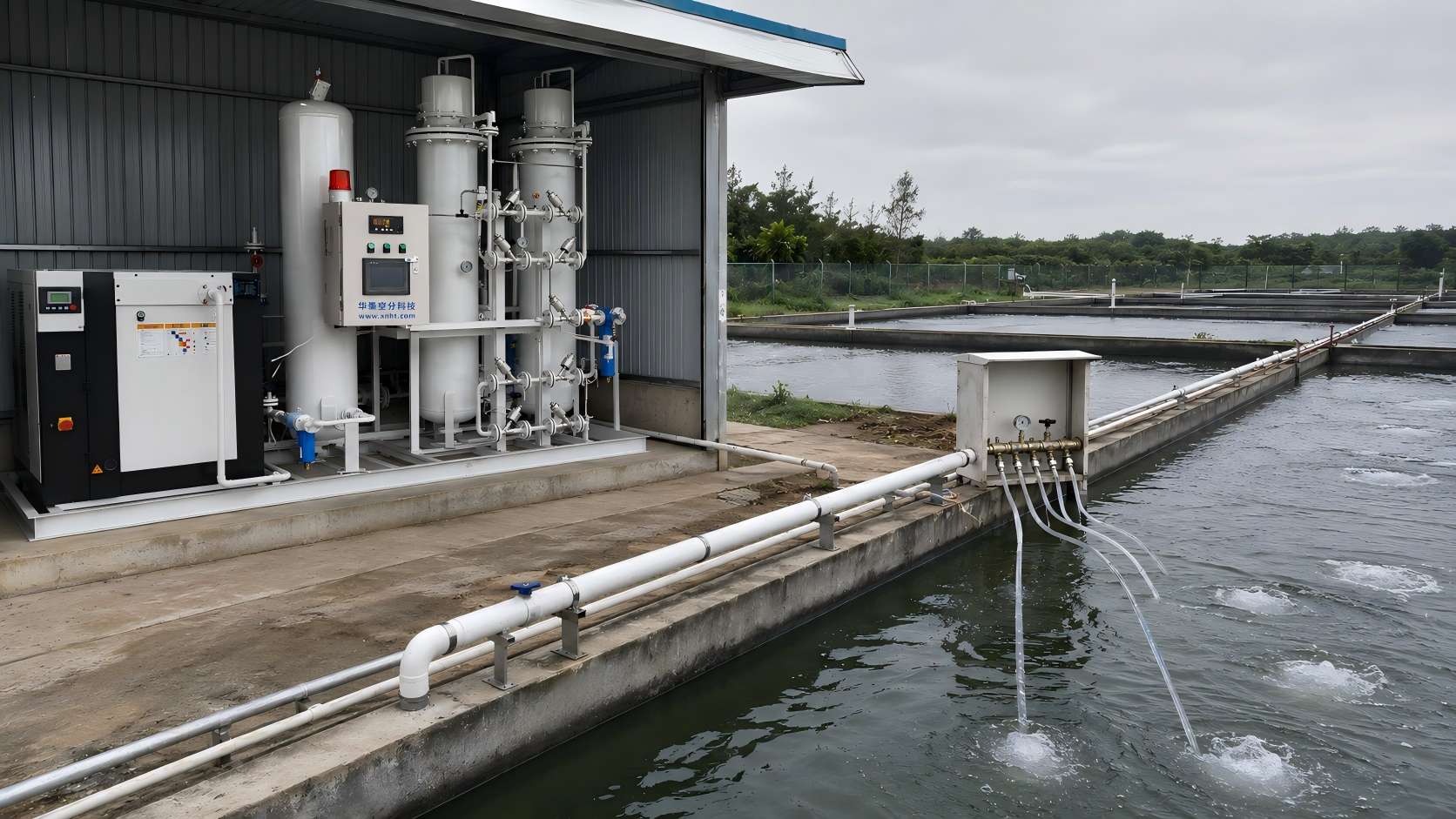
Oxygen Generator for Fish Farming in Sichuan, China
Huatai supplied an HTO90-5 on-site oxygen generation system to Sichuan Huarui Aquaculture Co., Ltd. for oxygen supply to its aquaculture units. The system was configured to produce 5 Nm³/h of oxygen at a purity of at least 90% and a delivery pressure of 0–0.3 MPa.
Installed in a fixed indoor equipment shelter beside the fish ponds, the system supports the customer’s continuous oxygen demand without relying on an external oxygen supply.
Project Specifications
-
- Customer: Sichuan Huarui Aquaculture Co., Ltd.
- Application: Aquaculture Oxygen Supply
- Model: HTO90-5
- Oxygen Flow: 5 Nm³/h
- Oxygen Purity: ≥90%
- Delivery Pressure: 0–0.3 MPa
- Operating Mode: Continuous Operation
- Installation: Fixed Indoor System
- Location: Sichuan, China
Need some help?
If you are unsure exactly what you need,
get in touch and we can help identify your requirements.
Customer Background and Oxygen Requirement
What Did the Customer Need?
| Project Requirement | Confirmed Data |
| Oxygen Flow | 5 Nm³/h |
| Oxygen Purity | ≥90% |
| Oxygen Delivery Pressure | 0–0.3 MPa |
| Gas Type | Oxygen |
| Operating Mode | Continuous |
| Installation Environment | Indoor shelter beside the fish ponds |
| Installation Type | Fixed |
| Power Supply | 380/220 V |
| Control System | Siemens PLC |
Huatai’s Aquaculture Oxygen Generation Solution
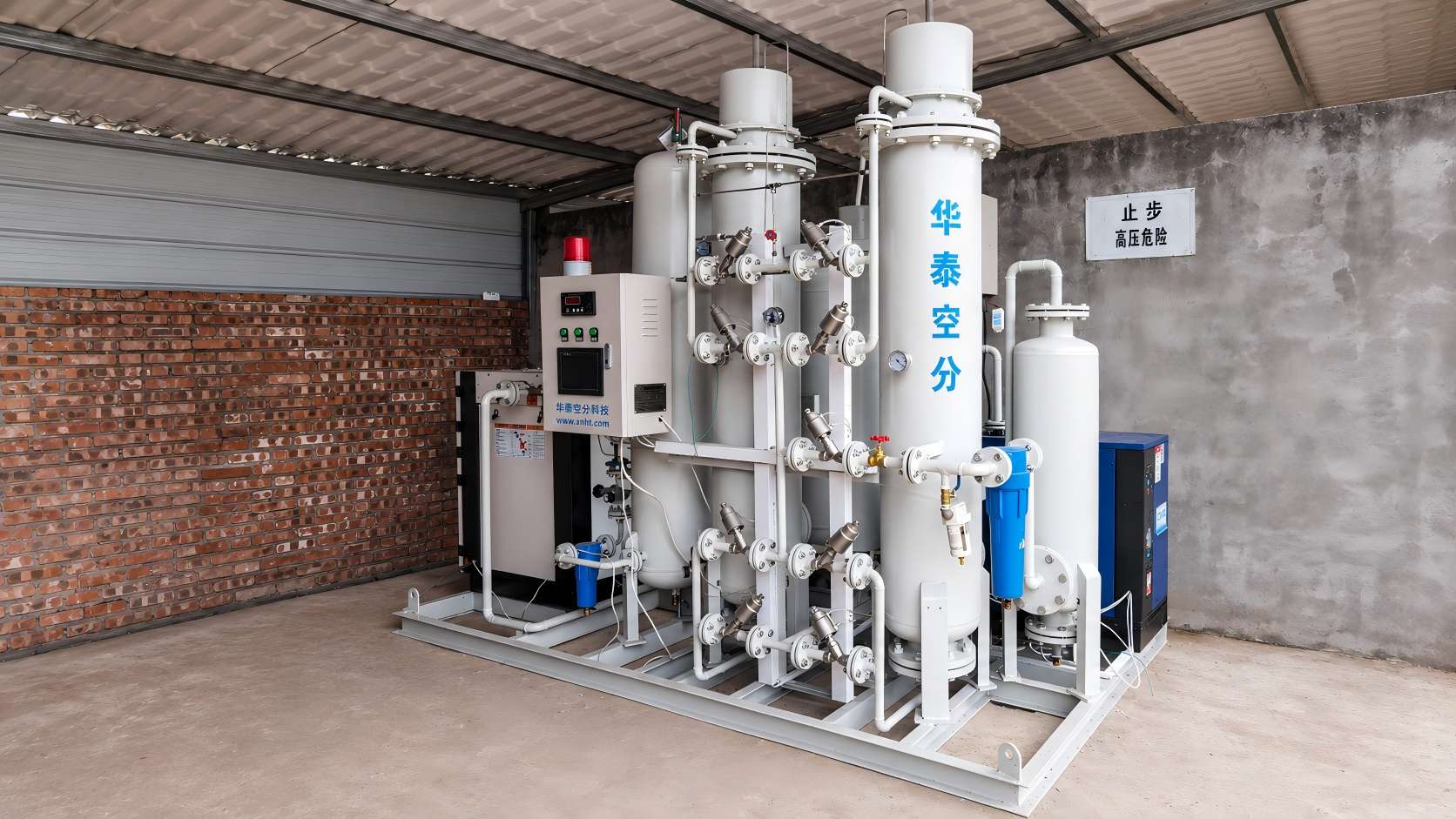
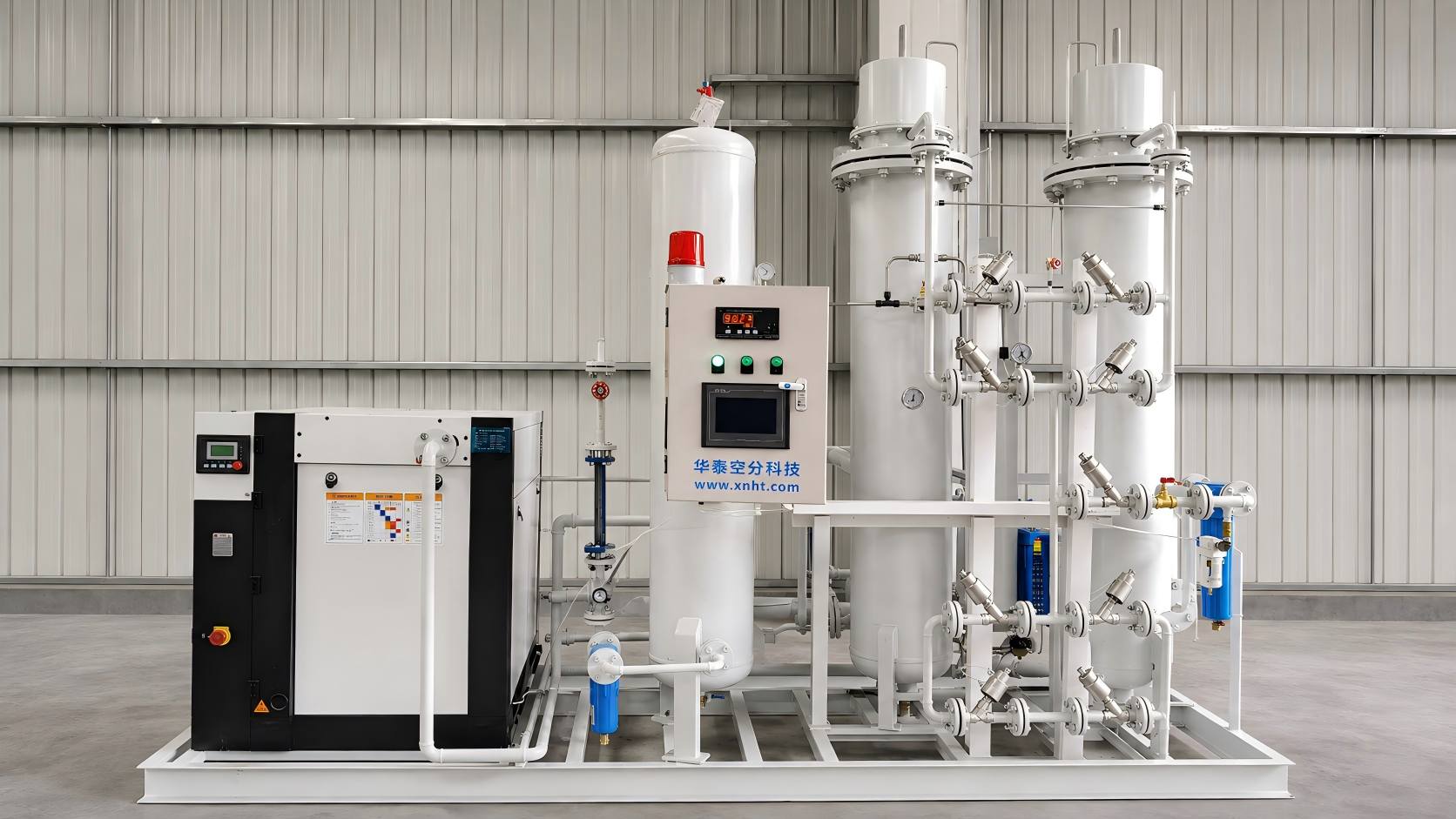
Huatai configured a complete on-site oxygen generation system covering compressed-air supply, air treatment, oxygen separation, oxygen buffering and automatic control. The equipment was installed as a fixed system in an indoor shelter beside the customer’s fish ponds.
Huatai selected the HTO90-5 oxygen generator according to the customer’s required flow of 5 Nm³/h, oxygen purity of at least 90% and delivery pressure of 0–0.3 MPa.
The system includes:
-
-
-
-
- Screw Air Compressor – Supplies compressed air for oxygen generation.
- Air Receiver Tank – Stabilizes the compressed-air supply before treatment.
- Four-Stage Filtration System – Removes particles, oil and other contaminants from the compressed air.
- Refrigerated Air Dryer – Reduces moisture before the air enters the oxygen generator.
- HTO90-5 Oxygen Generator – Produces oxygen at the specified flow and purity.
- Oxygen Buffer Tank – Stabilizes oxygen output before delivery to the aquaculture units.
- Siemens PLC Control System – Controls operating sequences and monitors system parameters.
- Connecting Pipes and Valves – Connect the system sections and manage airflow and oxygen delivery.
- The complete configuration was selected around the site’s required oxygen flow, purity, delivery pressure and continuous operating conditions.
-
-
-
The air receiver and air-treatment equipment prepare the compressed air before it enters the oxygen generator. The HTO90-5 produces the required oxygen, while the oxygen buffer section supports gas storage and supply stability before oxygen is delivered to the aquaculture units.
Huatai develops complete Gas Generation Solutions based on the required gas type, flow, purity, pressure, control requirements and site utilities.
How the System Supplies Oxygen to the Aquaculture Units
The HTO90-5 generates oxygen on site from treated compressed air. After passing through the oxygen buffer tank, the oxygen is delivered to the customer’s designated fish-farming units through the site’s oxygen distribution system.
The system was configured to provide:
-
-
-
- Oxygen Flow: 5 Nm³/h
- Oxygen Purity: ≥90%
- Delivery Pressure: 0–0.3 MPa
- Supply Point: Designated aquaculture units
- Operating Requirement: Continuous oxygen supply
- This configuration provides a dedicated oxygen source beside the fish ponds and supports the customer’s continuous aquaculture operation. Actual dissolved oxygen levels and farming results depend on the water volume, stocking density, water temperature, distribution piping and oxygen diffusion method.
-
-
Automatic Control and Continuous Operation
Type K Thermocouple Temperature Range
-
-
-
-
- Siemens PLC control
- Programmed valve switching
- Automatic operating cycles/li>
- Centralized operating control
-
-
-
-
-
Type K Thermocouples Material
-
-
- Continuous-operation configuration
- Operating parameter monitoring
-

Installation Beside the Fish Ponds
The oxygen generation system was installed as a fixed indoor unit in a simple equipment shelter beside the fish ponds. This arrangement positions the oxygen source close to the aquaculture area while providing covered space for the oxygen generator, compressed-air treatment equipment, oxygen buffer tank and control system.
The installation layout was planned around:
-
-
-
-
- Equipment access
- Ventilation conditions
- Oxygen pipeline routing
- 380/220 V electrical supply
- Operating and maintenance clearance
- Connection to the designated aquaculture units
- The shelter provides the project’s indoor equipment area but should not be described as a standard equipment room. Rain protection, drainage, ventilation and ambient temperature conditions should be evaluated separately for each aquaculture installation.
-
-
-
Maintenance Requirements
Routine maintenance covers the air compressor, air receiver tank, filtration system, refrigerated air dryer, oxygen generator, valves and connecting pipelines. Maintenance intervals depend on operating hours, inlet-air quality and actual site conditions.
Recommended maintenance tasks include:
-
-
-
-
-
-
- Checking the operating condition of the air compressor
- Inspecting the air receiver tank and pipelines
- Checking filter differential pressure and filter-element condition
- Inspecting the refrigerated air dryer
- Monitoring oxygen purity, flow and delivery pressure
- Inspecting valves, pipelines and connection points
- Replacing applicable filter elements according to the maintenance schedule
- The air compressor should be serviced according to its manufacturer’s instructions. Applicable filter elements should be inspected and replaced according to the maintenance schedule supplied with the system rather than using one fixed replacement interval for every component.
-
-
-
-
-
Routine inspection and component replacement should follow the system’s oxygen generator maintenance requirements and actual operating conditions.